A successful event answers the questions your attendees will have before anyone has to ask. Where to park, where to enter, where vendor row starts, which door leads to the ballroom. When that information is missing, your staff spends the day pointing. When it is handled well, attendees don’t have to think about it at all.
Event signs deliver that information, while carrying your branding and sponsor branding across the venue. Here’s a look at the main types, where each one gets used, and what you’ll want to determine before you order.
Key Takeaways
- Event signage does two jobs at once, moving people through your site while delivering brand and sponsor visibility.
- The right sign type depends on where it hangs, how long it stays up, and what it attaches to.
- Outdoors, wind exposure and viewing distance drive the decision more than appearance does.
- Leave dates, scores, and one-time sponsor names off a sign and it can be reused next year.
- Signage is sellable inventory, and mapping your placements before you sign sponsor agreements is what turns a sign expense into revenue.
- Build your production schedule backward from load-in day.
Why Event Signage Matters
Most events happen in venues that were built for something else, whether that’s a parking lot, a soccer complex, a downtown block, or a hotel ballroom. Signage is what makes the space read as your event. It’s also the first thing an attendee sees on the way in and the last thing they follow on the way out.
The operational case is easy to see. Clear signage at your entry points reduces congestion and cuts down the number of questions your staff has to field. Since parking, registration, restrooms, and concessions account for most of what attendees ask about, answering those from 50 feet away frees your people up to run the event.
The brand value proposition aligns with the operational case. Coordinated signage is what separates an event that looks planned from one that looks assembled.
When signage falls short, that’s just as visible. Everyone in the building notices a sponsor logo that never went up or a wayfinding sign that blew down at 9 a.m.
Types of Event Signs
Event signage covers a range of formats, and the right one for a given job depends on the surface it goes on, how long it needs to last, and how far away people will be reading it.
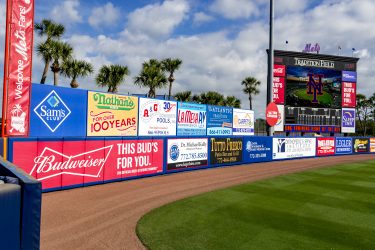
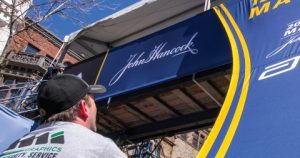
Banners. Banners do much of the heavy lifting at most events. Vinyl handles entrances and general branding, mesh is for fence lines and open-air sites where wind is a factor, and cloth holds up best in indoor areas that will be photographed under venue lighting. Large banners cover building faces. Windscreens turn fencing you already have into branded surfaces, and barricade covers do the same for crowd control barriers. Event banners are where most organizers start.
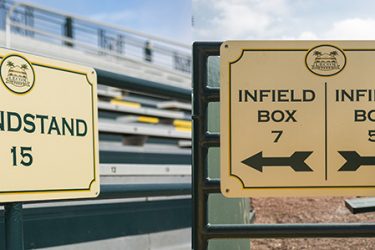
Directional and wayfinding signs. Wayfinding signage covers parking, entrances, restrooms, seating, and concessions. If your event changes location from year to year, ask about removable arrow components, since the same panel could work next season with a different arrow. Facility maps handle orientation at larger sites.
Freestanding and portable signs. Softline A-Frames are padded and weatherproof, so they can go courtside or field side where a rigid sign would be a hazard, and their quick-change Velcro system lets you swap graphics without replacing the frame. Advertising flags and custom flags mark entrances from a distance. Branded tents and table covers take care of registration and vendor spaces.
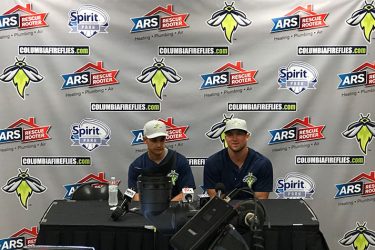
Backdrops and photo areas. Media backdrops serve press conferences, award presentations, and interview positions. This is the one category where your material choice comes down almost entirely to how it will read on camera and cloth is the right solution in almost every case.
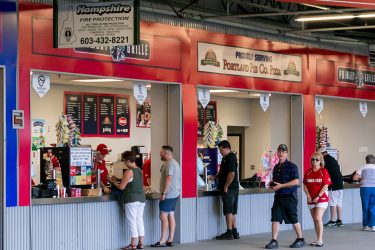
Concession signage. Concession signs convey menus, pricing, and line management. If attendees can figure out what they want before standing in lines, you’ve made their day a little easier and their trip to get a snack a little quicker.
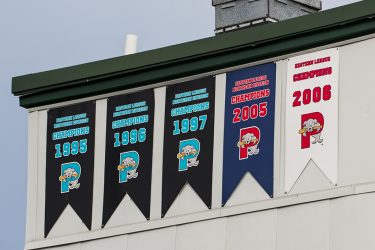
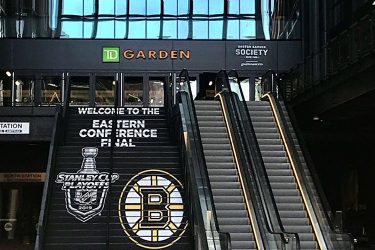
Sponsor and recognition displays. Scoreboard signage, stadium branding, championship banners, and pennant strings create high-visibility placements for your sponsors.
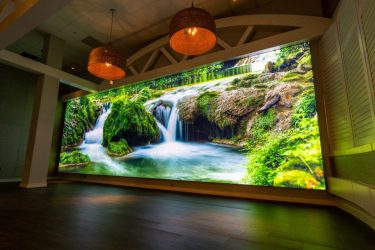
Applied and illuminated graphics. Floor graphics and window graphics use surfaces you already have and don’t require any hardware. Backlit signs and dimensional signage hold attention indoors where a printed panel won’t. Temporary signage covers short-run needs across all of these formats.
Event Signage Ideas by Event Type
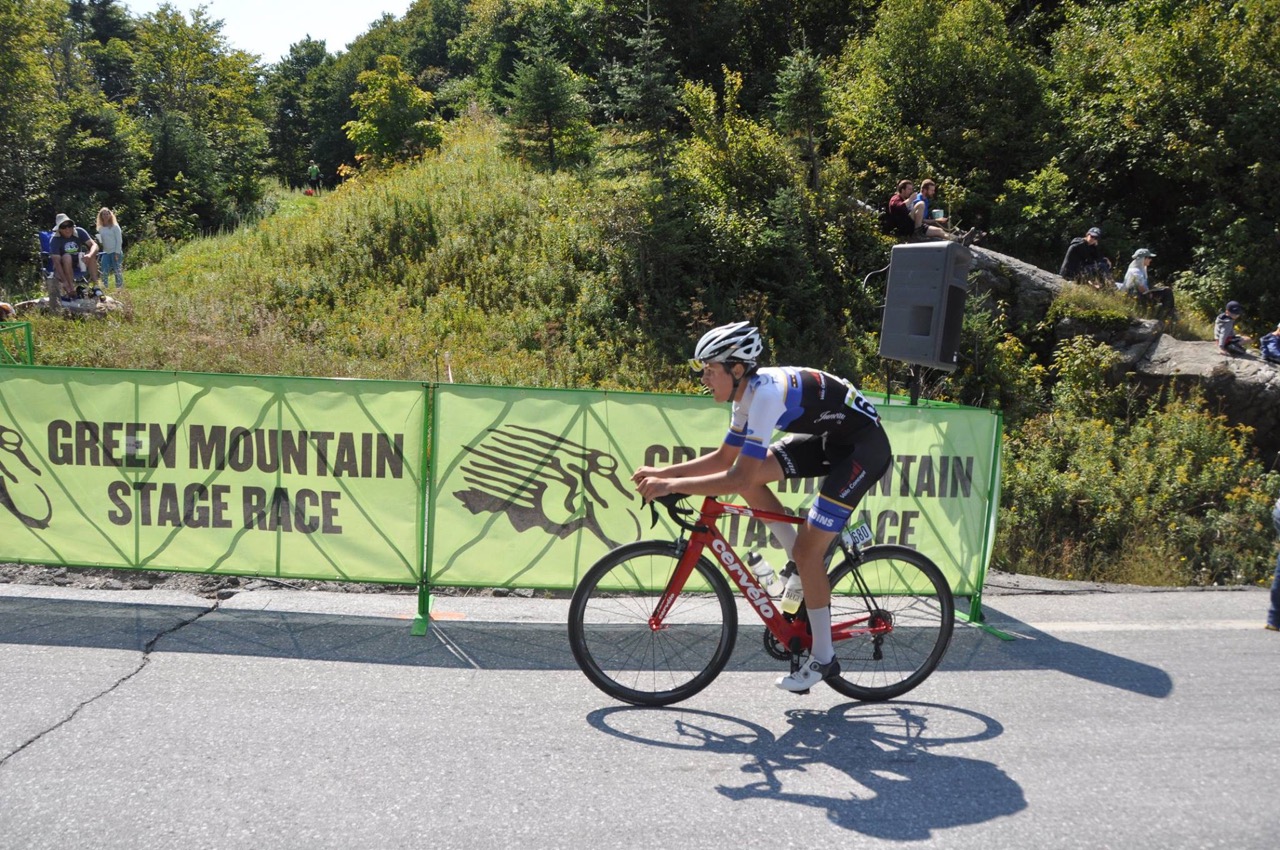
Sports tournaments. Field and court identification, bracket and schedule boards, sponsor runs along fence lines and sidelines, award backdrops, parking and shuttle direction. At multi-field complexes, your field numbering has to be readable from the parking lot, since that’s where families start looking for it. Padded A-frames belong anywhere gameplay comes close to the sign.
Festivals and community events. Entrance arches, vendor row and food court identification, stage signage, restroom and first aid direction, and fencing that turns a perimeter into sponsor inventory. Festivals tend to have the longest walking distances and the least familiar layouts, which is why wayfinding is usually the highest-value signage type.
Corporate, campus, and private events. Registration, breakout room identification, agenda displays, exhibitor recognition, and keynote backdrops. Room assignments change between sessions, so ask for a format that lets you swap a panel instead of reprinting a whole sign. Commencements and private events need what a conference needs, which is a welcome sign, clear direction, and something worth photographing.
How to Turn Event Signs Into Sponsorship Revenue
Signage is one of the few event expenses you can turn into revenue. The organizers who do this well treat every available surface as sellable inventory.
Walk the site and map every surface that will be visible: fence lines, barricades, entrances, stage flanks, scoreboards, concession areas, shuttle stops, and any blank wall in attendees’ sight lines. Give each placement an impression estimate based on foot traffic and dwell time, then tier them accordingly. An entrance banner and a fence panel behind the last field shouldn’t carry the same price.
Photograph every placement during the event and put those images in your recap report. Your sponsor is buying visibility, and the photographs are what prove they got it when renewal comes around.
Two production choices will protect your margin. Put the branding or logo on a panel that swaps out without reprinting the whole graphic, using a Velcro or insert system wherever the format allows it. And keep year references off anything you plan to reuse, because a banner that reads “Presented by” will come back out of storage next season while one that reads “2026” won’t.
Frequently Asked Questions
What are the different types of event signs?
The main categories are banners, directional and wayfinding signs, freestanding displays like A-frames and flags, media backdrops, concession signage, sponsor recognition displays, and applied graphics for floors and windows. Most events use some mix of these, chosen by where each sign goes and how long it needs to stay up.
What is the difference between event signs and event banners?
Event signs is the broader category, and it covers every format used to communicate and brand at an event. Event banners are one type within it: flexible printed graphics made from vinyl, mesh, or cloth that hang from fences, poles, walls, and frames. If what you need is rigid, freestanding, illuminated, or applied to a floor, you're looking at a different sign type.
What are the best outdoor event signs?
That depends on wind exposure more than anything else. Mesh banners let air pass through, which reduces the strain on both the banner and the fence it's attached to. Windscreens work well for long fence runs, and weighted or staked freestanding signs handle open ground. For anything exposed, ask for webbing and high-wind grommets instead of standard hems.
How far in advance should I order event signage?
Work backward from load-in, and allow time for design and proofing, production, shipping, installation plus a buffer for artwork revisions. If you're planning a large or multi-location program, start as soon as your sponsor commitments and site plan are settled. If your event is coming up fast, tell us the date first so we can tell you what's achievable.
Can event signs be reused for future events?
Many can, and designing for reuse is the easiest way to bring down your annual signage cost. Keep dates, scores, and one-time sponsor names off anything you plan to store. Quick-change graphic systems let you run the same program year after year and reprint only the pieces that change.
How do event signs help with sponsorships?
They create the visibility your sponsors are paying for and the proof that it was delivered. Mapping your placements before you finalize agreements is what lets you tier and price them.
Get a Quote
AMI Graphics produces custom event signs for sports tournaments, festivals, corporate events, and campus programs, from a handful of directional signs to a full program running across multiple locations. Tell us your date, your venue, and what you’re working with.